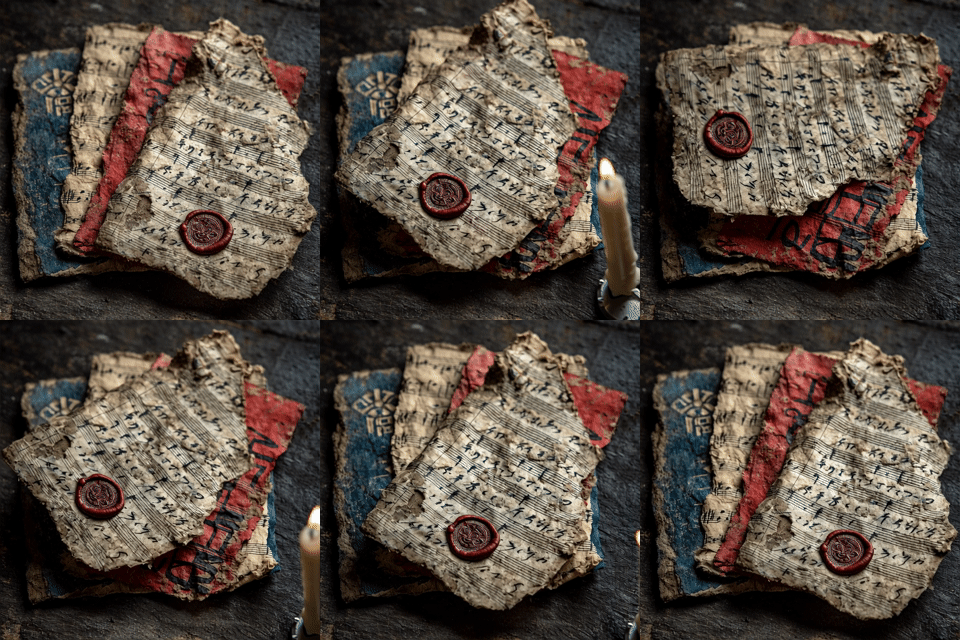
Musical Letters Between Three Cultures
Each composition is a "letter" from one musician's cultural tradition to another—a question posed, a response offered, a dialogue across distance. These are Baudelairean correspondences: explorations of how Andean mountains might "sound" in Caribbean rhythm, how prairie silence might "feel" in Portuguese harmony.
Before email, before telephone, letters were how people maintained relationships across distance. The epistolary form—writing structured as correspondence—produced some of literature's greatest works: Rilke's Letters to a Young Poet, the correspondence between James Baldwin and Margaret Mead, the letters exchanged between composers across centuries.
Charles Baudelaire's 1857 poem "Correspondances" proposed a different kind of exchange: synesthesia as philosophy, the idea that sensory experiences correspond across domains—that colors have sounds, that perfumes have shapes, that music has temperature. The poem became foundational for Symbolist art and, eventually, for the cross-sensory exploration of modern jazz.
Correspondences combines both traditions. Each composition is a "letter" from one musician's cultural tradition to another—a question posed, a response offered, a dialogue across distance. But these are also Baudelairean correspondences: explorations of how Andean mountains might "sound" in Caribbean rhythm, how prairie silence might "feel" in Portuguese harmony, how African drum patterns might "speak" in classical piano language.
The album structure is explicit: tracks are titled as letters ("Dear Mariah, From the Sacred Valley"), making the epistolary conceit clear. But the music transcends the concept—these aren't clever exercises but genuine emotional communications between musicians who have become, through Pachamaima, family.
Ralph Writes About Harmony
Ralph Quispe addresses Mariah Fontaine from his homeland, asking: How does your European harmonic tradition hear our Andean scales? The pentatonic modes of Quechua music don't align with Western equal temperament—notes fall between the piano's keys. Ralph's letter explores this gap.
Ralph opens alone, playing a traditional huayno melody on bass. But he bends the notes—the quartertones that exist in Andean music but can't be played on piano. He's showing Mariah what she can't reach.
Mariah responds with impressionist chords—Debussy's whole-tone explorations, which similarly challenged Western tonality. She's saying: We too have sought the notes between notes. Her Paris training surfaces.
The dialogue deepens. Ralph introduces a sikuri breathing pattern—the collective inhalation and exhalation of panpipe ensembles. Mariah translates this into sustain pedal technique, letting chords breathe with similar rhythm. Juan supports with the gentlest pulse, a heartbeat beneath the conversation.
The climax is a passage where Ralph plays a melody just outside Mariah's harmonic reach—and she finds a way to meet him. Not by matching the notes (she can't) but by creating harmonic space where his notes make sense. A pentatonic melody over impressionist chords: East meets West through two musicians who've both traveled far enough to find the meeting point.
Mariah Writes About Time
Mariah Fontaine addresses Juan Reyes, reflecting on what she learned in Senegal and Mali about the African roots of his Caribbean rhythms. She asks: How do you carry the weight of history in your body? How do your hands hold both trauma and joy?
Mariah opens with a solo piano passage derived from Cheick Tidiane Seck's teachings—the Malian pianist who showed her how African music thinks about time. The rhythm is circular, not linear; the melody emerges from repetition rather than development.
Juan responds with a sabar pattern from his Dakar training, played on snare and toms. He's showing her the source—the Senegalese rhythm that eventually became, through the diaspora, the patterns his grandfather played in Villa Mella.
The conversation becomes a history lesson in sound. Mariah plays fragments of spirituals, blues, early jazz—the African diaspora's musical evolution in North America. Juan responds with parallel fragments from the Caribbean: son, rumba, merengue. Ralph's bass traces the low-frequency connection between all of them.
The emotional peak comes when Mariah plays a simple hymn—the kind sung in Black churches across America, derived from African call-and-response patterns. Juan accompanies with palos rhythms. The connection is undeniable: same root, different flowers.
The piece ends with Mariah alone again, playing the opening Malian pattern, now transformed by the conversation. She's internalized something.
Juan Writes About the Ground Beneath
Juan Reyes addresses Ralph Quispe, exploring the connection between drumming and earth. In Afro-Dominican tradition, drums connect to ancestors buried in the ground. In Andean tradition, Pachamama is the earth itself. Juan asks: What does the ground hear when we play?
Juan opens with a palos de muerto rhythm—literally "drums of the dead," played at Dominican wakes to help spirits travel. The pattern is insistent, grounded, speaking downward into the earth.
Ralph responds with an arco bass passage that evokes the Andean concept of Apus—mountain spirits that listen and respond. His notes are low, sustained, vibrating as if into stone.
The dialogue explores resonance: how sound travels through earth, how drummers and bass players share the low frequencies that connect to something primal. Mariah's piano is absent for the first half—this is a conversation between earth instruments.
When Mariah enters, she plays in her lowest register, joining the conversation rather than commenting on it. Her Mali training surfaces: she learned that the djembe's bass tone connects to earth, just as the palos and the Andean drums do.
The piece builds to a rhythmic climax—all three instruments playing interlocking patterns that suggest the earth itself drumming back. Then sudden silence, and a single bowed bass note: the ground responding.
The Trio Writes Together
The album's centerpiece. All three musicians address each other simultaneously on the theme of home—what it means, how it changes, whether you can return to it. Each has left home, been transformed by wandering, and returned different.
The piece opens with all three playing "home" themes simultaneously: Ralph's huayno, Juan's merengue, Mariah's prairie hymn. The effect is polyglot, each voice in its own language, yet somehow coherent.
First movement: Leaving. The themes fragment, become uncertain. Ralph's bass loses its pentatonic center; Juan's rhythm syncopates unpredictably; Mariah's harmonies drift toward dissonance. The wandering years, musically rendered.
Second movement: The journey. The international influences surface: Bahia, Dakar, Paris, Seville, Lisbon, Mali. The trio quotes from music they encountered abroad, weaving it into their own voices. Ralph plays a berimbau pattern on bass; Juan introduces flamenco compás; Mariah channels Hermeto Pascoal's harmonic wildness.
Third movement: Return transformed. The home themes reappear, now changed by the journey. Ralph's huayno has Brazilian swing; Juan's merengue has African polyrhythm; Mariah's hymn has Malian circularity. Home is recognizable but expanded.
Final section: A collective statement. All three musicians playing a theme composed together, one that didn't exist before Pachamaima. Home is no longer a place you come from but a place you create together.
Three Solo Meditations
After the collective letter, each musician offers a brief solo meditation—the things too personal to say in dialogue. These are the private thoughts written after the letter is sealed. The postscripts are vulnerable, unpolished, intimate. They reveal what the letters couldn't.
Solo bass, completely unaccompanied. Ralph plays a melody his grandmother sang, one he's never recorded before. No Bahia influence, no jazz vocabulary—just the Sacred Valley, unmediated.
Solo drums and voice. Juan plays a palos pattern and sings a fragment of a song his grandfather taught him, in the Kikongo-derived vocabulary of Villa Mella's sacred tradition.
Solo piano. A Métis fiddle tune Mariah learned from her grandmother, arranged for piano. Her Franco-Albertan roots, finally given voice in Pachamaima's music.
Unanswered Questions
Not every letter receives a response. Not every question has an answer. This track explores the correspondences that fail—the cultural gaps that can't quite be bridged, the mysteries that remain.
The trio plays in deliberate disconnection. Ralph poses a melodic question; Juan responds with a rhythm that doesn't quite fit; Mariah offers harmony that doesn't resolve. The effect is productive frustration—beauty in the gaps.
The piece is structured as three failed attempts at convergence, each building toward union and falling just short. The fourth attempt succeeds—briefly—before fragmenting again.
The final section accepts the failure. The trio plays together but not in unison, three voices that have learned to coexist without fully merging. The message: correspondence doesn't require complete understanding. Sometimes the letter is enough, even if the response never comes.
What We Keep to Ourselves
Every correspondence has letters that were written but never sent—thoughts too raw, too true, too dangerous. This final track imagines what Ralph, Juan, and Mariah might write but never share.
The trio plays at barely audible volume—the musical equivalent of whispered secrets. The themes from throughout the album appear in fragments, transformed, almost unrecognizable. The listener strains to hear.
At the four-minute mark, the volume swells suddenly—a confession bursting out—before immediately retreating to whisper. The piece ends with all three instruments sustaining a single chord that slowly fades: the unsent letter, held but not released.
Question → Response → Deep dialogue → Collective reckoning → Private confession → Productive failure → Unsent truths
Intimate, chamber-like, emphasizing melody and harmony over rhythm (though rhythm remains essential); frequent solo and duo passages
The epistolary conceit provides structural clarity while the Baudelairean correspondences allow synesthetic exploration
Following the elemental immersion of Agua Memory, this album foregrounds the relationships between musicians. The trio is no longer just three traditions meeting but three humans in deep dialogue.