Back to Discography
The Weight of Silence
ALBUM IV

The Weight of Silence

What's Not Played Speaks Loudest

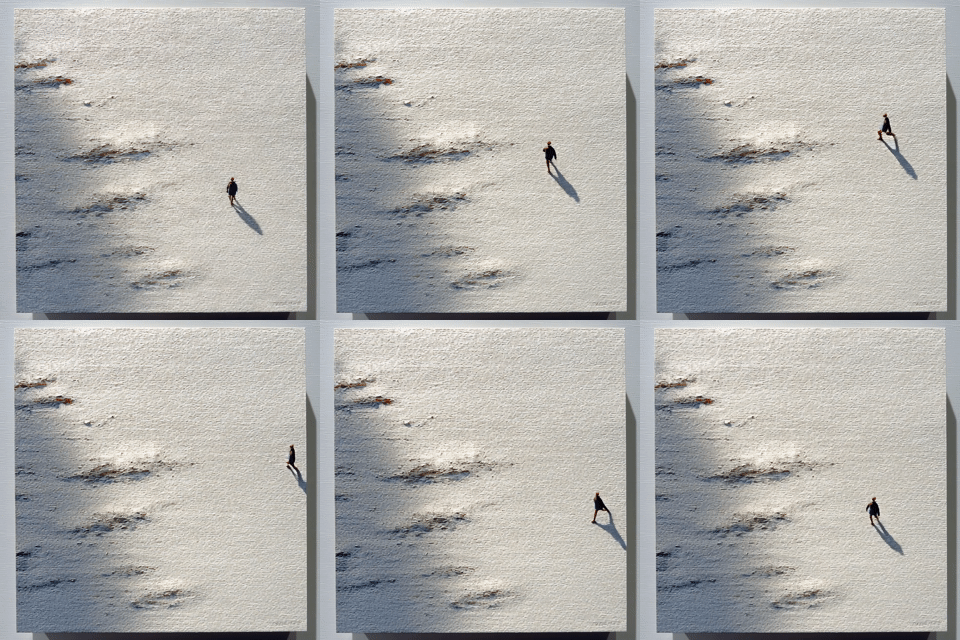
An exploration of absence as presence. What musics have been silenced? What rhythms were lost when cultures were suppressed, languages forbidden, traditions erased? This album lives in the spaces between notes, dominated by silence and extreme dynamic restraint.

7 Tracks
2025 Year
~52 Minutes

Conceptual Foundation

The Politics of Silence

Every culture has musics that were silenced. Colonial powers banned indigenous instruments. Slave owners forbade African drumming. Residential schools punished children for singing in their native tongues. The history of music is also a history of suppression—and The Weight of Silence asks what was lost.

But this is not a protest album in the conventional sense. Rather than filling the silence with sound, Pachamaima chose to inhabit it. To make the absence audible. To let the listener feel the weight of what is not there.

The Aesthetics of Space

The album draws on Morton Feldman's late works, where notes are separated by vast silences, and the listener becomes acutely aware of time passing. It channels the Japanese concept of ma—the pregnant emptiness between events that gives them meaning. It references the spacious, reverberant recordings of ECM Records, where silence is treated as an instrument.

Every track features extended passages of near-silence. The dynamic range is extreme: from barely audible whispers to brief, devastating crescendos. The trio plays with restraint that becomes its own form of intensity.

Track by Track

01

Before the Conquest

What Music Existed Before It Was Written Down?

+
0:00 / 0:00

Concept

Before Spanish colonizers arrived in the Americas, before European missionaries documented (and distorted) indigenous music, entire sonic worlds existed that we can never fully recover. This track imagines what might have been—not a reconstruction, but a meditation on unknowability.

Musical Architecture

Ralph opens with a bass melody derived from the few surviving Quechua musical fragments—patterns passed down orally for five centuries. But he plays only fragments, leaving gaps where knowledge has been lost.

Mariah responds with harmonies that might have accompanied such melodies—but we cannot know. She plays possibilities, not certainties, her chords dissolving into silence before they can settle.

Juan contributes with indigenous percussion references: the tinya drum, the wankara, instruments that survived colonization. His patterns are interrupted by long pauses—the rhythms that were forgotten.

The piece never fully coalesces. It remains fragmentary, suggestive, mourning what cannot be recovered while honoring what survived.

"We cannot know what our ancestors sang before the conquest. But we can honor that unknowing. Every silence in this piece is a song we'll never hear." — Ralph Quispe
02

The Ship's Hold

The Hold of the Slave Ship

+
0:00 / 0:00

Concept

In the holds of slave ships, drums were forbidden—they could signal rebellion. But rhythm survived in the body: in breathing patterns, in the clinking of chains, in heartbeats synchronized across hundreds of captive people. This track imagines that survival.

Musical Architecture

The track begins with near-silence: just the sound of breathing, multiple breaths layered and slowly synchronizing. Juan's drums enter as body percussion—the sounds a person can make without instruments.

Mariah's piano represents the ship's creaking wood, the mechanical sounds of the vessel. Her notes are sparse, dissonant, oppressive. Ralph's bass is a heartbeat—first one, then many, as the enslaved begin to breathe together.

The piece builds almost imperceptibly. The rhythm that emerges from synchronized breathing becomes proto-polyrhythm—the seed of what would become, in the diaspora, the world's most influential musical traditions.

The climax is quiet but devastating: a full rhythmic statement that could never have been played aloud, existing only in the collective consciousness of the captives. Then silence—the enforced silence of the hold.

"They took the drums, but they couldn't take the rhythm. It lived in the breath, in the heartbeat, in the chains. My ancestors carried the music inside their bodies across the ocean." — Juan Reyes
03

Residences

The Residential Schools

+
0:00 / 0:00

Concept

Mariah's grandmother survived a residential school in Alberta, where indigenous children were punished for speaking their languages or practicing their traditions. Songs were silenced. Ceremonies were forbidden. This track is Mariah's reckoning with that inherited silence.

Musical Architecture

Mariah opens alone with a hymn—the kind of European sacred music that was forced upon indigenous children. She plays it correctly, beautifully, as the children were required to.

But beneath the hymn, almost inaudibly, Ralph's bass plays a ghost melody—a traditional song that might have been sung in secret, after lights out, when the teachers couldn't hear. The melody is fragmentary, remembered imperfectly, fading in and out of perception.

Juan enters with the sound of footsteps—the surveillance of the schools, the constant monitoring. His brushes on snare create an atmosphere of contained terror.

The piece's emotional center comes when Mariah stops playing the hymn and, after a long silence, plays the ghost melody openly—what her grandmother might have sung if she'd been allowed. The melody is simple, achingly beautiful, and incomplete.

"My grandmother never sang her songs for me. She'd learned too well that singing could bring punishment. I play this for what she couldn't give me—and for all the children who forgot their songs entirely." — Mariah Fontaine
04

The Empty Archive

Stories Never Written

+
0:00 / 0:00

Concept

Archives preserve what the powerful deemed worth preserving. Countless musical traditions were never documented—considered too primitive, too dangerous, or simply invisible to those holding the pens. This track explores the empty spaces in the historical record.

Musical Architecture

The trio plays in extreme quiet throughout—as if afraid of being heard, of being recorded, of entering the archive that excluded them.

Mariah reads from colonial-era music histories, her voice processed into whispers: "The natives have no music worthy of the name..." "Their rhythms are primitive, unsuited to notation..." The quotes are real, devastating.

Against these words, the trio plays music that directly contradicts them: complex polyrhythms from Juan, sophisticated harmonies from Ralph, virtuosic piano from Mariah. But they play so quietly that the music barely registers—as if even now, the archive refuses to hear.

The piece ends with the sound of pages turning—empty pages, the archive's blank spaces where these traditions should have been recorded.

"History is written by the victors, but music is sung by the survivors. The archives failed us. We are filling in the gaps." — Juan Solares, Producer
05

What the Elders Didn't Say

Stories Never Told

+
0:00 / 0:00

Concept

Even within communities, some knowledge was never transmitted. Elders died with songs they chose not to teach—sacred music too powerful for changed times, melodies tied to practices that could no longer be maintained. This track honors the intentional silences of tradition-keepers who protected their cultures by withholding them.

Musical Architecture

Each musician plays fragments of music their elders began to teach them—and stopped. Ralph's grandmother started a song once and fell silent; he plays the fragment she gave him, then nothing. Juan's grandfather mentioned a ceremony rhythm that was not for outsiders; Juan plays around it, never quite playing it.

Mariah's contribution is particularly poignant: a recording of her grandmother humming, the tune unidentifiable, stopping mid-phrase. Against this, Mariah improvises what might have come next—but she cannot know.

The track is structured around these interrupted transmissions. Each begins, promises continuation, and stops. The silence after each stopped melody is the true content of the piece.

"Some things are not meant to be preserved. My grandmother took songs to her grave deliberately. I honor that choice even as I mourn the loss." — Mariah Fontaine
06

Glacial Silence

The Sound of Ice Before It Melts

+
0:00 / 0:00

Concept

The Andean glaciers that have existed for millennia are disappearing. With them go the sounds they make—the creaking, the dripping, the thunderous calving that communities have lived with for generations. This track expands the album's theme to geological time: the silence of a warming world.

Musical Architecture

This is the album's most ambient piece. Ralph's bowed bass creates long, glacial tones—the sound of ice shifting on scales of centuries. Mariah's piano is crystalline, each note like ice forming, then melting.

Juan works with metal percussion: singing bowls, cymbals played with bows, creating textures that evoke the otherworldly sounds of ice. Field recordings from Andean glaciers are layered beneath: actual sounds of the ice that is disappearing.

The piece unfolds with geological patience. Changes happen over minutes, not measures. The listener must slow down to hear it—to experience time as a glacier experiences it.

Near the end, the sound of water: the glacier becoming river, the solid becoming liquid, the ancient becoming temporary. Then silence—the silence of extinction.

"The glaciers have their own music. I've heard them since I was a child. Soon, only recordings will remain. And then only memory. And then only silence." — Ralph Quispe
07

El Peso

The Weight Itself

+
0:00 / 0:00

Concept

The album's title track asks: what does silence weigh? After forty-five minutes of loss, suppression, and mourning, how do we carry forward? The piece is both culmination and transcendence—bearing the weight and, somehow, rising.

Musical Architecture

The track begins with the longest silence on the album—nearly two minutes of nothing. The listener, conditioned by the preceding tracks, waits. The waiting becomes the weight.

When music finally enters, it is achingly slow: a single bass note from Ralph, sustained until it fades. Then silence. A single piano chord from Mariah. Silence. A single brush stroke from Juan. Silence.

Over the track's twelve-minute duration, the silences gradually shorten while the sounds gradually extend. The trio is learning to speak again after trauma—each note harder-won, more meaningful, more precious.

The final section achieves a kind of damaged beauty: all three playing together in slow, hymn-like harmony. It is not resolution—the weight remains. But it is continuation. The silenced traditions have not defeated the music. The weight has become, somehow, bearable.

The album ends not with sound but with silence—a different silence now. Not the silence of suppression but the silence of contemplation. The listener is left in it, carrying the weight themselves.

"Silence is not the opposite of music. It is music's partner, its shadow, its truth. What we don't play speaks as loudly as what we do. This album taught me that weight can be carried. That silence can be heard. That absence can be presence." — Pachamaima Collective Statement
Album Summary

Emotional Arc

Loss → Survival → Suppression → Fragmentation → Inheritance → Geological time → Transcendence

Sonic Palette

Extreme dynamic restraint, extended silences, Morton Feldman-inspired spaciousness, Japanese ma concept, ECM-style reverberant recording

Thematic Unity

The politics of silence: examining what musics have been silenced, what rhythms were lost, and how absence becomes its own form of presence

Pachamaima Evolution

Following the intimate dialogues of Correspondences, this album turns inward to confront historical trauma and the weight of cultural loss—finding transcendence through restraint.