Back to Discography
Markets
ALBUM VI

Markets

Where Cultures Have Always Mixed

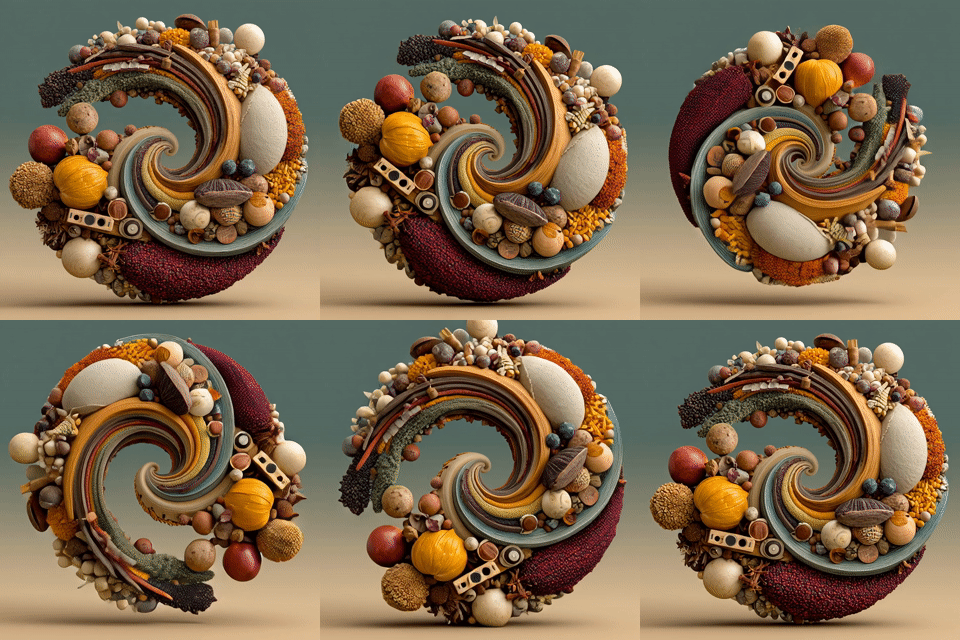
Markets are humanity's oldest mixing technology. Before the internet, before radio, before written language spread widely, markets were where cultures collided, exchanged, transformed. This album is Pachamaima at their most vibrant, chaotic, and rhythmically rich.

7 Tracks
2025 Year
~52 Minutes

Conceptual Foundation

Markets as Cultural Technology

Before the internet, before radio, before written language spread widely, markets were where cultures collided, exchanged, transformed. The silk roads, the spice routes, the slave trade (in its horror), the migration of musical instruments, cooking techniques, religious ideas, fashion, language itself—all of this moved through markets.

Markets are humanity's oldest mixing technology. They are also chaotic, overwhelming, sensory-saturated environments—the opposite of the quiet, considered spaces where Western art music developed. This album embraces that chaos.

Four Specific Markets

San Pedro, Cusco

The enormous indoor market at 3,400 meters where Andean and Spanish colonial traditions collide daily.

Mercado Modelo, Santo Domingo

The bustling Caribbean market where African diaspora culture meets Latin American commerce.

Les Enfants Rouges, Paris

Europe's oldest covered market, now a convergence point for Moroccan, Japanese, Lebanese, and French cuisine.

The Imaginary Market

A fictional convergence market that exists only in music—where all three traditions meet simultaneously.

The Most Danceable Music

This album is Pachamaima at their most vibrant, chaotic, and rhythmically rich. Where previous albums explored meditation, memory, and liminality, Markets explodes into the physicality of commerce, negotiation, and celebration. This is their most danceable work—music that demands the body's participation.

Track by Track

01

San Pedro, Cusco

Altitude and Abundance

+
0:00 / 0:00

Concept

The enormous indoor market at 3,400 meters where Andean and Spanish colonial traditions collide daily. Ralph Quispe's home territory, rendered in sound: the thin air, the abundance of goods, the collision of indigenous and colonial economies.

Musical Architecture

The track opens with sampled ambient sound from the market itself—vendors calling, doors opening, footsteps on stone. Ralph's bass enters with a high, airy melody that evokes altitude; the notes are sparse, as if breath is precious.

Juan introduces a huayno rhythm adapted for drum kit, the traditional Andean pattern now electrified with Caribbean energy. Mariah's piano creates cascading runs that suggest the visual overwhelming of the market—pyramids of fruit, textiles in impossible colors, dried llama fetuses hanging beside plastic toys.

The piece builds to a frantic middle section where all three instruments imitate the overlapping calls of vendors. Then a sudden drop to near-silence: the moment when you find a quiet corner, catch your breath, and the chaos recedes momentarily.

The final section is a celebration of abundance—a joyful groove that acknowledges the market's essential function: sustenance, connection, survival made festive.

"San Pedro is overwhelming in the best way. You can buy alpaca sweaters, fresh ceviche, ancient grains, knock-off electronics, and healing herbs all within fifty meters. It's capitalism and community in one chaotic embrace." — Ralph Quispe
02

Mercado Modelo

Santo Domingo Hustle

+
0:00 / 0:00

Concept

Juan Reyes takes the lead, bringing the trio into the Caribbean's most vibrant marketplace. The Mercado Modelo in Santo Domingo is commerce as performance—every transaction a small drama, every vendor a character actor.

Musical Architecture

Juan opens with a merengue pattern at breakneck speed—the güira shimmer replaced by hi-hat work that captures the same metallic urgency. Ralph's bass enters with a walking line that suggests moving through crowded aisles, dodging bodies and merchandise.

Mariah introduces melodic fragments in quick succession: the musical equivalent of glimpsing one product after another—mangos, cigars, lottery tickets, rum, religious icons, pirated DVDs. Her left hand maintains a tumbao pattern while the right hand scatters notes like coins.

The track features a call-and-response section where Juan vocalizes vendor calls in Dominican Spanish while the instruments respond. The effect is documentary and participatory—you're not watching the market, you're in it.

The groove is relentless, rarely pausing, because the Mercado Modelo never pauses. Even the bridge section maintains forward motion, a brief respite that's still walking tempo.

"In the Mercado Modelo, music is everywhere. Not just recordings playing from stalls—the whole thing has rhythm. The way people move, bargain, argue, laugh. We just had to capture that rhythm." — Juan Reyes
03

Les Enfants Rouges

Paris, Where Africa and Europe Meet

+
0:00 / 0:00

Concept

Mariah leads the trio into Europe's oldest covered market, now a convergence point for global cuisine. The Marche des Enfants Rouges in Paris's Le Marais district has been operating since 1615—but today it's as multicultural as anywhere on Earth.

Musical Architecture

The track opens with Mariah playing a French musette waltz—the accordion music of Parisian streets, here rendered on piano with deliberate old-world charm. But within eight bars, Juan introduces a gnawa pattern from Morocco, and the waltz begins to transform.

Ralph's bass weaves between European and North African modes, the two traditions that collide most visibly in contemporary Paris. The track becomes a meditation on immigration, colonialism, and the way markets—unlike governments—simply absorb difference.

A middle section features Mariah quoting Satie, the Parisian eccentric, over Juan's interpretation of traditional Moroccan drumming. The combination shouldn't work, but it does—the way an Italian-Moroccan food stall next to a Japanese bento stand makes perfect sense in the context of commerce.

The climax brings all influences together in a groove that's simultaneously Parisian, African, and completely new. This is hybridization as accomplished fact, not aspiration.

"Paris taught me that European culture is already mixed—it just doesn't always admit it. The market doesn't lie. You see where all the flavors actually come from." — Mariah Fontaine
04

El Regateo

The Haggle—Music as Negotiation

+
0:00 / 0:00

Concept

In many markets, haggling is expected—price is a conversation, not a fact. El Regateo (the haggle) renders this negotiation as music: the opening offer, the counter, the feigned outrage, the eventual agreement.

Musical Architecture

The track is structured as a series of musical negotiations. Mariah states a melodic "price"—a complex, demanding phrase. Juan's drums respond with skepticism—a pattern that says "too much." Ralph's bass offers a counter-melody, simpler but still substantial.

The back-and-forth continues, each round bringing the parties closer together. The dynamics fluctuate wildly—moments of apparent impasse where the music threatens to stop entirely, followed by renewed engagement.

There's humor here: exaggerated gestures, theatrical pauses, the pleasure both buyer and seller take in the dance. The haggle is social as much as economic, and Pachamaima captures this playfulness.

The resolution comes not with one party winning but with a groove that incorporates elements from all the "offers"—a synthesis that leaves everyone satisfied. The market's magic: value created through exchange.

"My grandmother could haggle for twenty minutes over the price of onions, and both she and the vendor would end up laughing. It was never really about the money—it was about connection, respect, the game itself." — Ralph Quispe
05

Closing Time

The Market at Dusk

+
0:00 / 0:00

Concept

Every market has a closing time—that golden hour when vendors tally their receipts, pack unsold goods, sweep floors, exchange gossip. The energy shifts from transaction to reflection.

Musical Architecture

The tempo drops significantly from the album's earlier tracks. Juan's drums become a shuffle, almost lazy, the exhaustion of a long day made rhythmic. Ralph's bass carries a melancholy that's not quite sad—more like the satisfied tiredness after good work.

Mariah's piano introduces a melodic theme that recurs throughout—a simple, memorable tune that sounds like something you'd hum while cleaning up. It's the music of routine, the comfort of familiar motions at day's end.

The track incorporates subtle references to each market already visited: a huayno fragment from San Pedro, a merengue echo from Santo Domingo, a musette ghost from Paris. As if, in fatigue, all markets blend into one.

The ending is tender: the instruments gradually drop out until only Ralph's bass remains, playing a lullaby to the empty stalls. Then silence—or rather, the ambient hum of a market at rest.

"There's something sacred about markets closing. All that energy compressed into the day, and then it disperses. Tomorrow it starts again. That cycle is human civilization in miniature." — Mariah Fontaine
06

The Imaginary Market

The Market That Doesn't Exist (Yet)

+
0:00 / 0:00

Concept

Having visited three real markets, Pachamaima now constructs an imaginary one—a convergence market that exists only in music, where all three traditions meet simultaneously without hierarchy or dominance.

Musical Architecture

The track opens with all three instruments playing their traditional roles simultaneously—huayno, merengue, and French impressionism overlapping in apparent chaos. For the first minute, it sounds like tuning up, three different songs in one space.

But gradually, points of connection emerge. Juan finds a pattern that bridges Caribbean and Andean time feels. Mariah discovers voicings that accommodate both pentatonic and European harmonic languages. Ralph's bass becomes the common ground, a low-frequency esperanto.

By the middle section, the chaos has resolved into something new—not a blend that erases difference, but a coexistence that celebrates it. You can still hear each tradition distinctly, but they've learned to share sonic space.

The track ends with a unison melody—the first time all three instruments play exactly the same notes at exactly the same time. A theme that emerged from their negotiation, belonging to none and all of them. The imaginary market's signature sound.

"We asked: what if there was a market where our three cultures had been trading for centuries? What music would have evolved there? This track is our answer—a tradition that should exist, even if it doesn't. Yet." — Juan Reyes
07

The Merchant's Song

The Rhythm of the Market

+
0:00 / 0:00

Concept

The album closes with the simplest composition—a melody that could be sung by any vendor in any market. It's the song merchants have always sung: I have what you need. Come, let us exchange. Both of us will leave richer.

Musical Architecture

Mariah introduces a melody so simple it sounds ancient—the kind of tune that might have existed for thousands of years, in markets from Babylon to Beijing. Ralph provides a walking bass that suggests travel, commerce, the movement of goods and ideas.

Juan's drums build gradually from silence to a full groove over the track's eight minutes. The arc mirrors a market day: quiet opening, building activity, peak commerce, gradual wind-down.

The melody passes between instruments, each adding ornamentation from their tradition but never obscuring the core tune. By the final section, all three are playing it together—the melody as strong as ever, now enriched with Andean, Caribbean, and European inflections.

The track—and album—ends with Mariah alone, playing the melody one final time, then letting the last note ring until it fades naturally. The market closes, but the song remains, waiting for tomorrow's opening.

"Every culture has merchant songs, vendor calls, market music. We wanted to write one that belonged to all of them—or to none of them, which might be the same thing." — Mariah Fontaine

Album Summary

Emotional Arc

Energy -> Hustle -> Hybridization -> Negotiation -> Fatigue -> Synthesis -> Simplicity

Sonic Palette

Vibrant, rhythmically dense, polyrhythmic, maximum energy with moments of respite; the most danceable Pachamaima album

Thematic Unity

Markets as cultural technology—spaces where difference is not erased but exchanged, where hybridity is the normal state of human interaction

Pachamaima Evolution

After the introspection of Thresholds, Markets explodes outward into physicality and celebration. The trio's most extroverted work—proof that their fusion can be joyful as well as profound.